Reading Remedy Review.
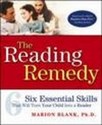 The Reading Remedy is a culmination of Marion Blank's experience as both a researcher and teacher of reading.
The Reading Remedy is not strictly a language textbook, but it's
a book every school-based speech-language pathologist should be aware of.
In the introductory chapters, Marion Blank outlines the flaws inherent in the two dominant
reading paradigms in western English speaking countries: Whole language and Phonics.
Blank demonstrates and outlines the faults and weaknesses in the whole
language reading instruction method.
Phonics doesn't get off lightly either. Phonics is certainly a more rules based reading method
than whole language, but has its own flaws. For instance, 'sounding out' words alone does not create effective readers.
It's difficult to argue against Blank's conclusions. All you need to do is research the national literacy levels in primary and
secondary schools in the western English speaking world. The figures are a concern. Something is amiss.
Reading Remedy review cont...
Marion Blank demonstrates that the best method for reading instruction is to concentrate on six separate but integrated
skills. Blank calls her reading instruction paradigm Phonics plus 5.
She states that beginning readers need to be taught phonics along with five other skills simultaneously -
text, semantics, syntax, writing and sequencing.
If any of these important skills is left out of reading instruction, then beginning readers may well struggle to understand the written language code. This is especially true of students with language disorder.
This may also explain why some students just 'don't get' reading. Both the phonics and whole language reading instruction methods tend to leave out important information.
Students with reading difficulty, often don't possess the ability to fill in the missing pieces unaided.
One of the methods that Marion Blank uses to demonstrate her ideas is the construction of an invented, logical but strange, language code. The author invites adult readers to attempt to unlock the code, using both the phonics methodology and the whole language methodology.
To successfully unlock the code is difficult. It's either a time consuming and laborious task, or a process that involves having to guess, based on faulty logic and insufficient information.
The task that Marion Blank presents to the reader, helps to provide a unique insight into what a frustrating challenge it must be to learn to read using only the two flawed systems of phonics and whole language. Indeed the exercises reveal the flaws of the whole language and phonics methodology in a very deliberate and personal way.
Advocates for the above reading methods, who state that their method is 'the best way' for reading instruction, may gain insight into how difficult unlocking the reading code is, if they were to try Marion Blank's exercises.
The Reading Remedy is highly recommended.
Return from Reading Remedy review to Speech Pathology Books
Enjoy this page? Please pay it forward. Here's how...
Would you prefer to share this page with others by linking to it?
- Click on the HTML link code below.
- Copy and paste it, adding a note of your own, into your blog, a Web page, forums, a blog comment,
your Facebook account, or anywhere that someone would find this page valuable.
|


