What is Oral Language?
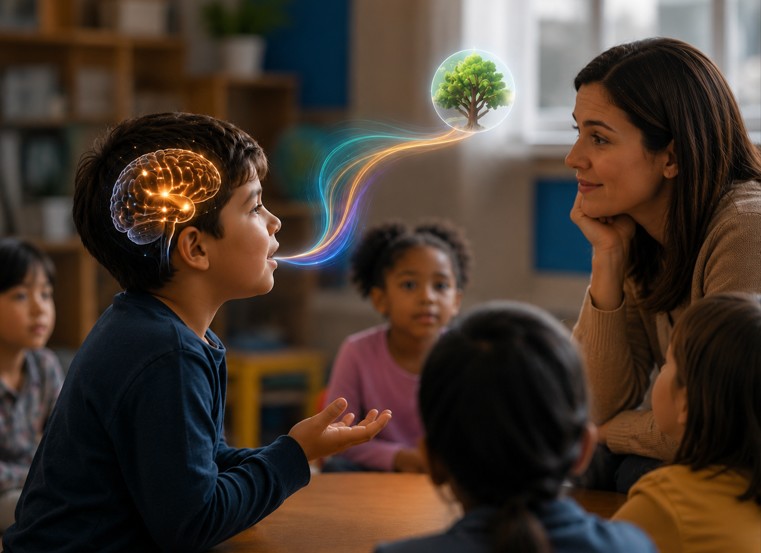
What is Oral Language?
Oral language is one of the most complex systems human beings have developed across the span of human history. It is so broad and interconnected that no short definition can fully capture the true majesty of it, so our task here is to attempt to describe oral language in a practical and meaningful way.
Oral language is a rule-governed system used to represent and communicate ideas, thoughts, feelings, and knowledge, mainly to do with comprehension of language and use of spoken language. These ideas and abilities can also be expressed through written, signed, and visual forms.
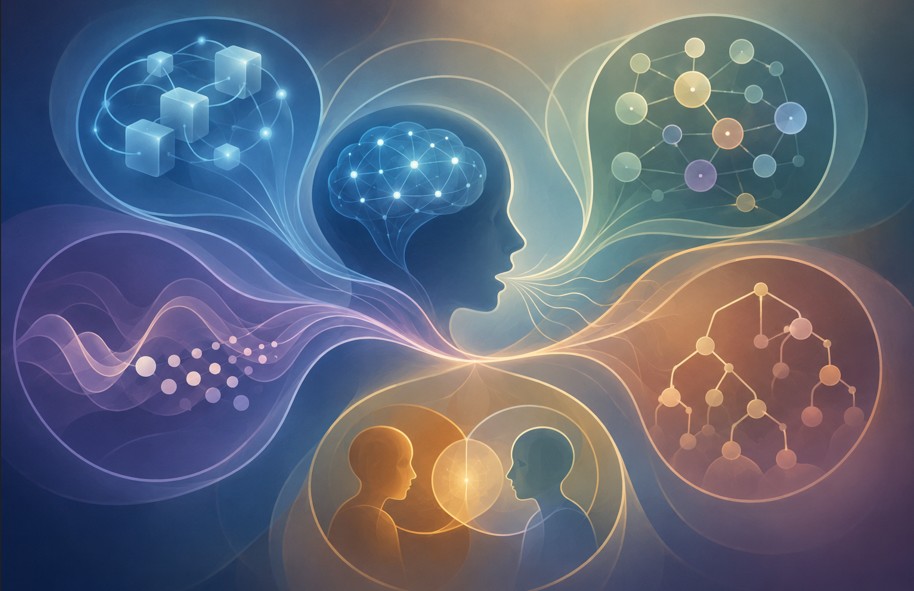
Language is not a single skill. It is made up of multiple interacting systems that work together in highly coordinated ways. These systems include vocabulary, grammar, syntax, narrative organisation, phonological awareness, and pragmatic or social communication skills.
Each of these complex and tightly integrated systems contributes something important to how we understand the world around us and express meaning.
At its core, language allows human beings to think, learn, remember, plan, question, imagine, and connect with others. It underpins almost every aspect of classroom learning and social interaction.
When oral language skills are strong, communication often appears effortless. When language development is disrupted or delayed, learning and participation can become much more difficult.
What is Oral language -
Development of Language
Language development refers to the gradual process through which we learn to understand and use language throughout our lives.
This development begins long before children speak their first words. Infants are constantly listening to the sounds, rhythms, and patterns of language around them.
Through repeated interaction with parents, siblings, carers, and other people in their environment, children begin to recognise words, attach meaning to those words, and eventually use oral language to communicate their thoughts.
As children grow, their language systems become increasingly sophisticated. They learn new vocabulary, develop longer and more complex sentences, understand social rules of conversation, and begin to use language for multiple purposes such as explaining, persuading, joking, questioning, and storytelling.
Much of this learning happens naturally through interaction and exposure.
However, formal education places much greater demands on oral language. Once children enter school, language becomes the foundation for reading, writing, comprehension, reasoning, and academic learning across all subjects.
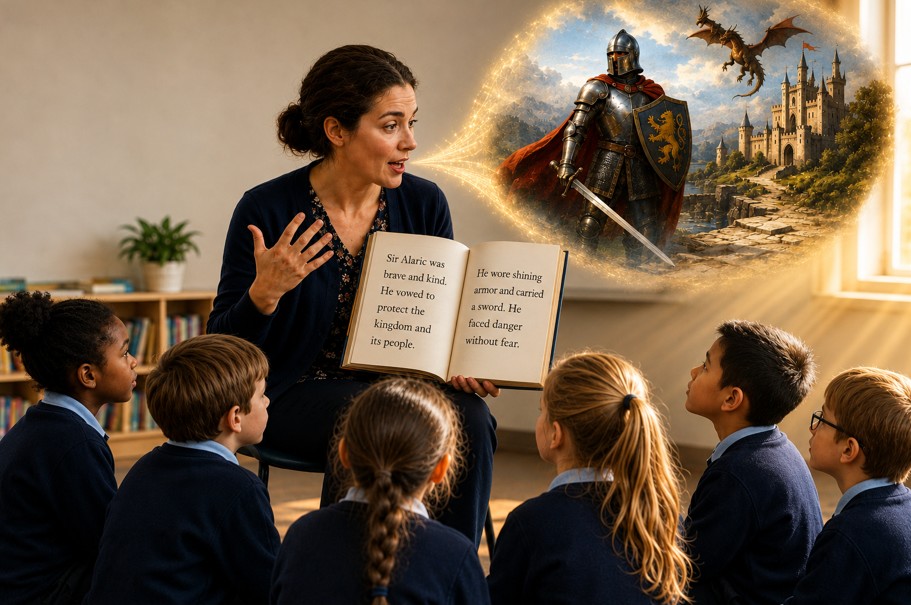
What is Oral Language - Seven Areas of Language to Know About
Seven Important Areas of Oral Language
For practical purposes, oral language can be broken down into several major areas. These systems overlap and constantly interact with one another.
Oral Narrative and the Science of Storytelling
Narrative language refers to the ability to understand and tell stories. Stories are not random collections of events. They follow predictable structures that help listeners and readers make sense of what is happening.
A basic story structure often includes:
Title
Characters
Setting
Initiating event or problem
Attempts to solve the problem
Consequences
Resolution
Students with difficulties in narrative language may struggle to organise events logically, explain cause and effect, or include enough detail for a listener to follow their ideas clearly. Narrative skills are strongly connected to later reading comprehension and written expression.
Working memory is not strictly a language system, but it plays an essential role in language learning and classroom performance.
Working memory allows students to temporarily hold and manipulate information. For example, students rely on working memory to follow multi-step instructions, understand long sentences, retain information while reading, and organise ideas before speaking or writing.
Weak working memory can significantly affect language comprehension and academic learning.
Vocabulary refers to word knowledge and meaning. This includes understanding both literal and figurative language.
Students with strong vocabulary knowledge are better able to understand texts, express their ideas precisely, and learn new concepts across the curriculum. Vocabulary development is closely linked to background knowledge and reading comprehension.
Students with language difficulties often know fewer words, learn new vocabulary more slowly, and may struggle to retrieve the right words during conversation or writing.
Syntax refers to the way words are organised into sentences.
Strong syntactic skills help students communicate ideas clearly and understand increasingly complex spoken and written language. Syntax influences both oral language and literacy development.
Students with syntactic difficulties may produce short, vague, or grammatically incomplete sentences. They may also struggle to understand complex sentence structures in classroom instruction and written texts.
Phonological awareness is the ability to consciously notice and manipulate the sound structure of spoken words.
This includes recognising syllables, rhymes, and individual speech sounds called phonemes. Phonological awareness is one of the strongest early predictors of later reading and spelling success.
Children with weak phonological awareness often struggle to learn letter–sound relationships, decode words accurately, and spell unfamiliar words.
Morphology is closely related and involves understanding the meaningful parts within words, such as prefixes, suffixes, and tense markers.
For example:
jump becomes jumped
happy becomes unhappy
teach becomes teacher
Knowledge of morphology helps students understand sentence meaning, decode unfamiliar words, and produce more precise spoken and written language.
Pragmatics (Social Communication)
Pragmatics refers to the social use of language.
This includes understanding conversational rules such as taking turns, staying on topic, interpreting tone of voice, adjusting language for different situations, and considering another person’s perspective.
Students with pragmatic language difficulties may find social interaction challenging. They may interrupt frequently, misinterpret social cues, dominate conversations, provide too little or too much information, or struggle to recognise how their communication affects others.
In many cases, students with pragmatic oral language difference process social communication in varied ways and may require explicit support to understand social expectations and conversational norms.
What is Oral Language -
Final Thoughts
Oral language is not a single skill that develops in isolation. It is a deeply interconnected system that supports learning, literacy, thinking, memory, and is a key for building social connections.
Understanding the different components of language helps teachers, parents, and clinicians recognise why some students thrive in language-rich environments while others require more explicit support.
It also reminds us that difficulties with reading, writing, oral and reading comprehension, or social interaction are often rooted in underlying language differences or delays, or could be a sign that a child has Developmental Language Disorder (DLD).
The more we understand language, the better equipped we are to support children as communicators, learners, and thinkers.
References
Paul R. (2001) Language Disorders from Infancy through Adolescence: Assessment and Intervention. Mosby
Wallach, G.P. (2008) Language Intervention for School-Age Students: Setting Goals for Academic Success. Mosby Elsevier
All images created via an iterative process with chatGPT
Content Revised and Updated 05/2026


