Why Early Speech Intervention Matters
Why Early Speech Intervention Matters
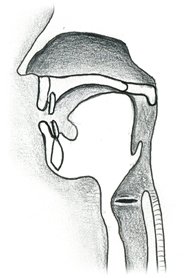
To produce speech sounds, we, as a species, have ingeniously learned to adapt and make use of eating and breathing mechanisms to produce intelligible speech.
Much of this page will focus on how speech sound structures and articulators shape phonemes. During speech awareness training children are introduced to the concept that connected speech is composed of individual sounds.
This is an important skill for children to learn, as having an awareness of individual phonemes can later be beneficial when children learn the link between speech sounds (phonemes) and print symbols (letters).
Those of us who work with children to improve their communication, need to have a solid grounding in speech therapy techniques to better engage children with speech errors and help children to communicate a little better.
Speech sound errors are perhaps the most common communication disorder that speech pathologists assess and treat in ypunger children.
Children who make the most common speech sound errors have difficulty correctly producing phonemes such as /k/ /l/ /r/ s/, etc. Most speech sound errors are made in the absence of anatomic, motor or sensory limitations.
Children, when attempting to learn the phonology of language, will often make errors because of a difficulty in perceiving and producing certain phonemes. A direct result of this difficulty is that children will often omit, substitute and simplify phonemes.
Many young children make speech sound errors as they first learn to talk. A toddler who says "tat" instead of "cat" or "wed" instead of "red" is often following a normal pattern of speech development, known as phonological processes.
As children slowly mature, these speech patterns disappear naturally as their speech sound system becomes more accurate and adult like.
However, for some children, speech sound errors do not simply disappear with age. And without speech intervention, incorrect speech patterns can become increasingly established and continue into the school years.
Over months and years, these patterns can become deeply ingrained and some speech and phonological processes can be difficult to change.
Although many children outgrow early speech errors, persistent speech sound disorders can continue into adolescence and even adulthood if left untreated.
Adults with unresolved speech sound disorders often report that they have "always spoken this way" because the incorrect speech pattern has become their brain's automatic way of producing speech.
Why Early Speech Intervention Matters - Speech Sound Errors Can Affect Literacy Outcomes
Speech sound difficulties not only affect spoken communication, for some children, the same difficulties may also appear in reading and spelling.
Learning to read and spell requires children to understand that words are made up of individual speech sounds (phonemes). If a child consistently says "tat" for "cat", they may also believe that the word begins with a /t/ sound rather than a /k/ sound.
This confusion can make it more difficult to develop accurate phonological awareness, phonics skills and spelling.
Not every child with speech sound difficulties experiences literacy problems. However, children with persistent speech sound disorders are at a greater risk of later difficulties with reading and spelling than children whose speech develops typically.
Early speech sound intervention can help reduce this risk by improving a child's sound awareness and production of speech sounds before incorrect patterns become too established and difficult to change.
Why Early Speech Intervention Matters - Children Often Cannot Hear Their Own Errors
Parents are often puzzled when they try to correct their child's speech. A typical conversation might sound something like this:
Parent: "Don't say tat. Say cat."
Child: "But I did say tat."
From the parent's perspective, the error seems obvious. From the child's perspective, he believes he has produced the correct word.
This is because young children are still developing metalinguistic awareness, which is the ability to think about and analyse language itself.
A child with a speech sound disorder is usually not deliberately producing incorrect speech. Instead, the incorrect sound has become their normal representation of the word.
If a child cannot hear the difference between what they are saying and the correct production, it becomes extremely difficult for them to change their speech independently.
Simply telling a child to "say it properly" rarely solves the problem because the child often has no awareness that a speech error has occurred.

Why Early Speech Intervention Matters - Developing Speech Self-Monitoring
An important goal in speech sound intervention is helping children become aware of their own speech, not just speech production but how they mke speech sounds.
Speech pathologists do far more than teach children how to produce a sound correctly. They also teach children to recognise the difference between a "good sound" and an "error sound." This ability to listen to and evaluate one's own speech is known as speech self-monitoring.
As children's awareness develops, they gradually learn to hear when they have produced an incorrect sound and begin correcting themselves without prompting. This represents a significant milestone in therapy because it means the child is becoming an active participant in improving their own speech.
Developing this awareness takes time and repeated practice. It cannot usually be achieved simply by correcting children whenever they make a mistake. Instead, children need carefully structured activities that help them listen, compare, discriminate between sounds, and gradually monitor their own speech.
Why Early Speech Intervention Matters - Parents and Teachers Play an Important Role
Speech therapy sessions provide the specialised instruction children need, but they make up only a small part of a child's week. Most children see their speech pathologist for between 30 and 60 minutes each week if they are fortunte enough to see a speech pathologist in private practice.
In the school system that number drastically reduces. School based speech pathoogists do not have the capacity to see children weekly for speech sessions.
Once a speech pathologist has identified the child's target sounds and demonstrated appropriate practice techniques, adults who are in the child's life daily can provide opportunities for children to practise these sounds during everyday routines.
Short practice sessions during reading, classroom activities, play, meals or conversation can provide learning opportunities.
Parents or teachers can become partners in the speech intervention process. The speech pathologist provides the assessment, diagnosis, treatment plan and specialised instruction, while the adults who spend the most time with the child help reinforce these new skills across a wide range of real-life situations.
Early identification, effective intervention and regular practice give children the best opportunity to develop clear, confident speech that supports successful communication, learning and literacy throughout their school years and beyond.

Click to learn about Traditional Articulation Therapy
Click to learn about Minimal Pairs Intervention (linguistic method)
Click to learn about Multiple Oppositions Intervention (linguistic method)
Click to learn about Empty Set Intervention (linguistic method)
Click to download the instruction and components for the Turbo Card Board Game (Handy game to be used either during speech intervention or as a reward activity)
Speech Intervention Sequence: Comprehensive speech therapy sequence method using traditional articulation intervention techniques
Why Early Speech Intervention Matters - Speech Intervention Pages
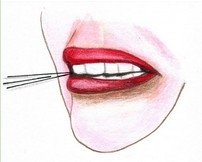
Speech Sound S: This page features a range of speech sound intervention techniques to efficiently and effectively stimulate the /s/ sound.
Speech Therapy Sequence - s Sound: This page features speech intervention stages, from sound in isolation to word level.
Speech Sound z: This page features a range of speech sound intervention techniques to efficiently and effectively stimulate the /z/ sound.
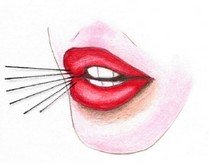
Speech Sound ʃ: This page features a range of speech sound intervention techniques to efficiently and effectively stimulate the /ʃ/ sound.
Speech Therapy Sequence - sh Sound:
This page features speech intervention stages, from sound in isolation to word level.
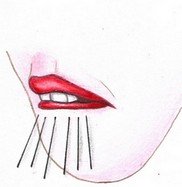
Speech Sound f: This page features a range of speech sound intervention techniques to efficiently and effectively stimulate the /f/ sound.
Speech Therapy Sequence - f Sound:
This page features speech intervention stages, from sound in isolation to word level.
Speech Sound v: This page features a range of speech sound intervention techniques to efficiently and effectively stimulate the /v/ sound.
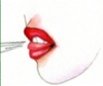
Speech Sound th (unvoiced): This page features a range of speech sound intervention techniques to efficiently and effectively stimulate the /θ/ sound.

Speech Sound th (voiced): This page features a range of speech sound intervention techniques to efficiently and effectively stimulate the /ð/sound.
Speech Sound tʃ: This page features a range of speech sound intervention techniques to efficiently and effectively stimulate the /tʃ/ sound.
Speech Therapy Sequence - ch Sound:
This page features speech intervention stages, from sound in isolation to word level.
Speech Sound dʒ: This page features a range of speech sound intervention techniques to efficiently and effectively stimulate the /dʒ/ sound.
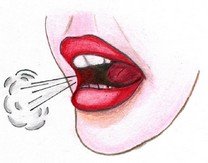
Speech Sound k: This page features a range of speech sound intervention techniques to efficiently and effectively stimulate the /k/ sound.
Speech Sound g: This page features a range of speech sound intervention techniques to efficiently and effectively stimulate the /g/ sound.

Speech Sound l: This page features a range of speech sound intervention techniques to efficiently and effectively stimulate the /l/ sound.

Speech Sound r: This page features a range of speech sound intervention techniques to efficiently and effectively stimulate the /r/ sound.
Illustrations on this webpage have been created using OpenAI's ChatGPT image-generation tools, with creative direction, editing and selection by Speech Language Resources
Updated 06/2026
Return from Why Early Speech Intervention Matters to Speech Sound Intervention Sequence
